El Cajon Sprinklers: How Often to Water Your Lawn in El Cajon
El Cajon Sprinklers put this watering guide together for El Cajon and East County homeowners setting a controller for the season. There is no single right number of minutes. There is a right approach for the soil under most of East County, and a set of rules that differ by water supplier, and both are below.
What Sets a Lawn's Water Need in El Cajon
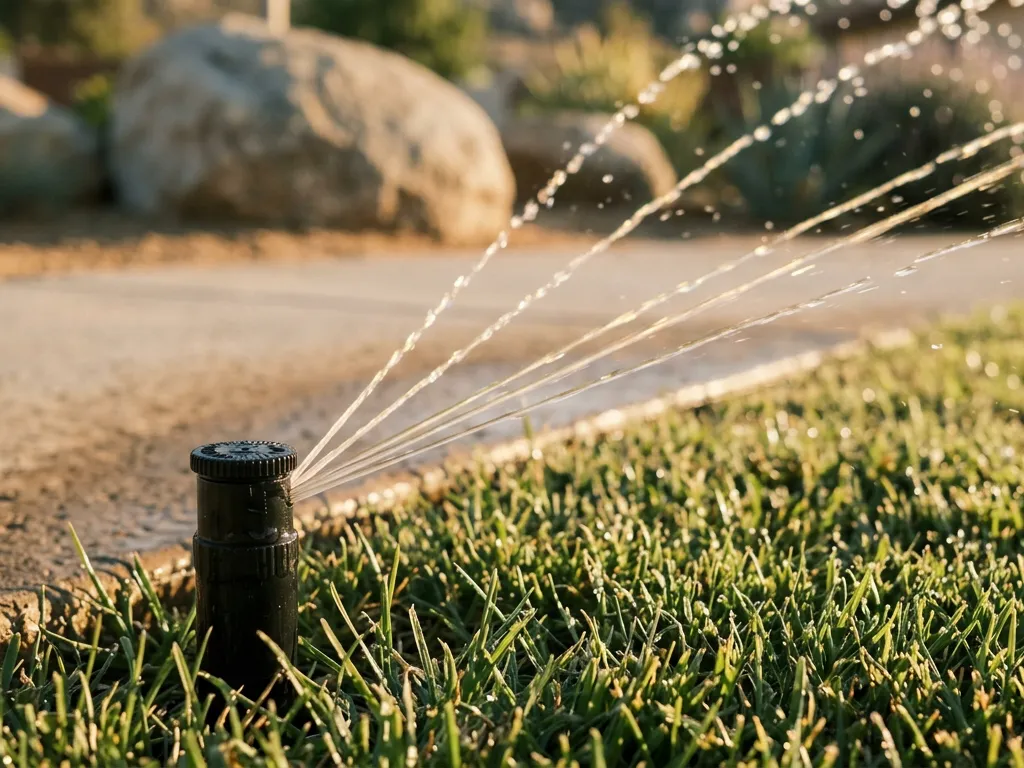
El Cajon averages only about 11.6 inches of rain a year, nearly all of it in the cooler months, so the sprinkler system supplies most of a lawn's water for most of the year. August highs around 86 degrees push the need up; a cool, cloudy spring brings it well down. The same lawn needs far more water in late summer than in a damp March.
That is why a schedule set once and left alone is a common way for a controller to go wrong. The right number of days and minutes is the one that matches the weather this month and the soil under the lawn.
Why the Soil Changes the Schedule
The USDA soil survey maps central El Cajon as about 13 inches of sandy loam over a dense clay subsoil that takes water at roughly three hundredths of an inch an hour. Water goes into the top layer readily, then stops at the clay. A single long cycle overfills the top layer and runs off. The same water delivered as two or three short cycles with a soak between them goes in.
On the Diablo clay mapped in Santee, Spring Valley and Lemon Grove, water goes in slowly from the surface down, at about an eighth of an inch an hour, so cycles need to be shorter still. In Alpine, on about 8 inches of coarse soil over granite, water goes in fast but the soil holds little, so lighter, more frequent watering suits it better than deep soaks.
The Watering Rules, Supplier by Supplier
Your bill names your supplier, and parts of El Cajon and Lakeside sit with Padre Dam rather than Helix. State law sits under all of them: no runoff from potable irrigation and no watering during or for 48 hours after measurable rain.
- Helix Water District
- Most of El Cajon, La Mesa, Lemon Grove, Spring Valley, Casa de Oro and Mount Helix. At Level 0, its normal condition, when checked in October 2026: no limit on watering days, times or minutes. Permanent rules: no runoff onto hardscape, streets, structures or neighbors, and no watering for at least 48 hours after rain.
- Padre Dam Municipal Water District
- Santee, Alpine and parts of El Cajon and Lakeside. At all times: spray heads and hoses limited to 10 minutes per area per day; water only before 10 a.m. or after 6 p.m.; no runoff; no watering during or for 48 hours after rain.
- Otay Water District
- Rancho San Diego and parts of Spring Valley. No runoff or overspray onto sidewalks, driveways, roadways or structures, and no irrigation during a storm or for 48 hours after a quarter inch or more of rain at Lindbergh Field.
- City of Poway
- Irrigate residential landscape between 6 p.m. and 10 a.m. only, with state rules on runoff and rain on top.
- Lakeside Water District
- Most of Lakeside. Check its current rules on the district's site; state rules on runoff and rain apply everywhere.
A Starting Schedule for Clay Soil
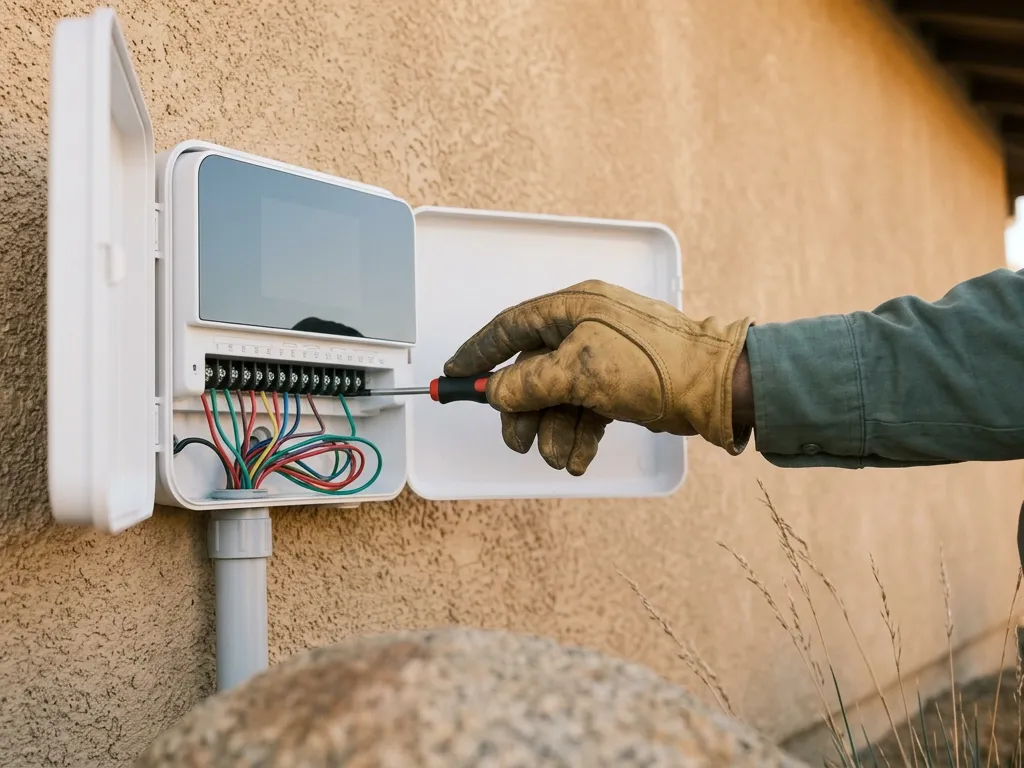
These steps give a schedule that fits every supplier above and the clay under most of the area. The run time comes from watching the zone, not from a chart.
- Pick the watering days your supplier allows: more in summer, fewer in spring and fall
- Split each lawn zone into two or three short cycles, with a soak between them
- Run them before 10 a.m., which satisfies every supplier above
- Watch the first cycle; when water starts to run off, that is the cycle length
- Cut run times back in spring and fall, and turn irrigation off when the rainy months are doing the work
- Skip the 48 hours after rain
Want the controller set for your El Cajon soil and supplier? Call the El Cajon Sprinklers line to talk it through.
Call (619) 361-7869Rotating Nozzles Change the Minutes
A zone retrofitted with rotating nozzles, at about 0.4 inches an hour against about 1.5 for fixed spray by Hunter's figures, needs much longer run times to apply the same water. That is the point: slower water soaks in. It also means a schedule copied from a spray zone will underwater a rotating zone. In Padre Dam's area, confirm how the 10-minute limit applies before setting long cycles. See rotating nozzle retrofit for what the swap involves.
Through the Year in El Cajon
The year here divides roughly in two. From late spring through early fall, warm, dry weather and highs around 86 degrees in August mean the system carries the lawn, and split cycles on every watering day are the pattern. Through the cooler months, when most of the area's roughly 11.6 inches of rain falls, the lawn needs far less, and in a wet stretch the controller can sit off entirely.
The months in between are where most water is wasted, because a controller set for summer keeps running on a summer schedule into a cool, damp spring. A seasonal adjustment, which most controllers offer as a single percentage, or a weather-based controller that recalculates from local weather each day, takes care of the in-between months without anyone remembering to do it. A weather-based controller earns an $80 SoCal Water$mart rebate on qualifying WaterSense labeled models; see smart irrigation controller installation.
Signs the Watering Schedule Is Wrong
The lawn tells you within a few weeks. Match what you see to the likely cause before changing anything.
- Runoff before a cycle ends (cycles too long)
- A lawn that stays soggy and grows fungus (too frequent)
- Shallow roots and a lawn that wilts by afternoon (too shallow and too frequent)
- Brown areas in a lawn that is otherwise wet (coverage, not schedule)
If brown areas stay brown on a good schedule, the problem is coverage, and irrigation inspection is the visit that finds misaimed, sunken or clogged heads. If runoff starts the moment a zone runs, the heads may be the wrong type for the soil.
Set the schedule to the soil, check it against your supplier's rules, and change it with the seasons.
Want a number for your own system? (619) 361-7869
Sources
- Helix Water District: drought regulations page (read October 2026)
- Padre Dam Municipal Water District: drought page (read October 2026)
- Otay Water District and City of Poway: water use efficiency measures (read October 2026)
- USDA NRCS Soil Data Access: soil map units at each town point (queried October 2026)
- Hunter Industries: MP Rotator and fixed spray precipitation rates
- SoCal Water$mart, Metropolitan Water District: residential rebates (read October 2026)