
East of El Cajon, in the foothills
El Cajon Sprinklers: Sprinkler Repair in Alpine
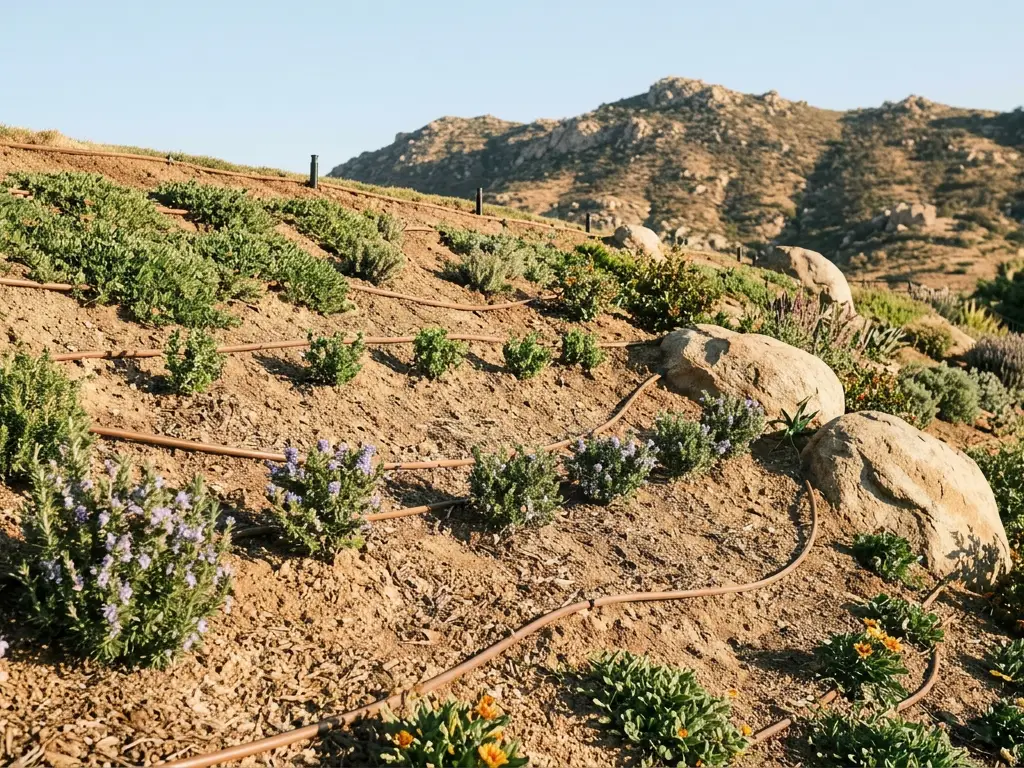
Rock outcrop, eight inches of soil over granite, and slopes where drip does what spray cannot.
- El Cajon and East County9 nearby communities, all within 20 miles
- Licensed, insured local contractorsWe work with them; check any license at cslb.ca.gov
- Written price firstTypical ranges published on every service page
- Calls answeredMonday to Saturday, 7am to 6pm
El Cajon Sprinklers arranges sprinkler repair and drip irrigation in Alpine, the unincorporated community of about 14,700 people about 12.2 miles east of central El Cajon. Alpine is served by Padre Dam Municipal Water District, and the USDA soil survey maps its center as Cieneba rocky coarse sandy loam, an eroded granitic soil on 9 to 30 percent slopes with rock outcrop across about 30 percent of the unit.
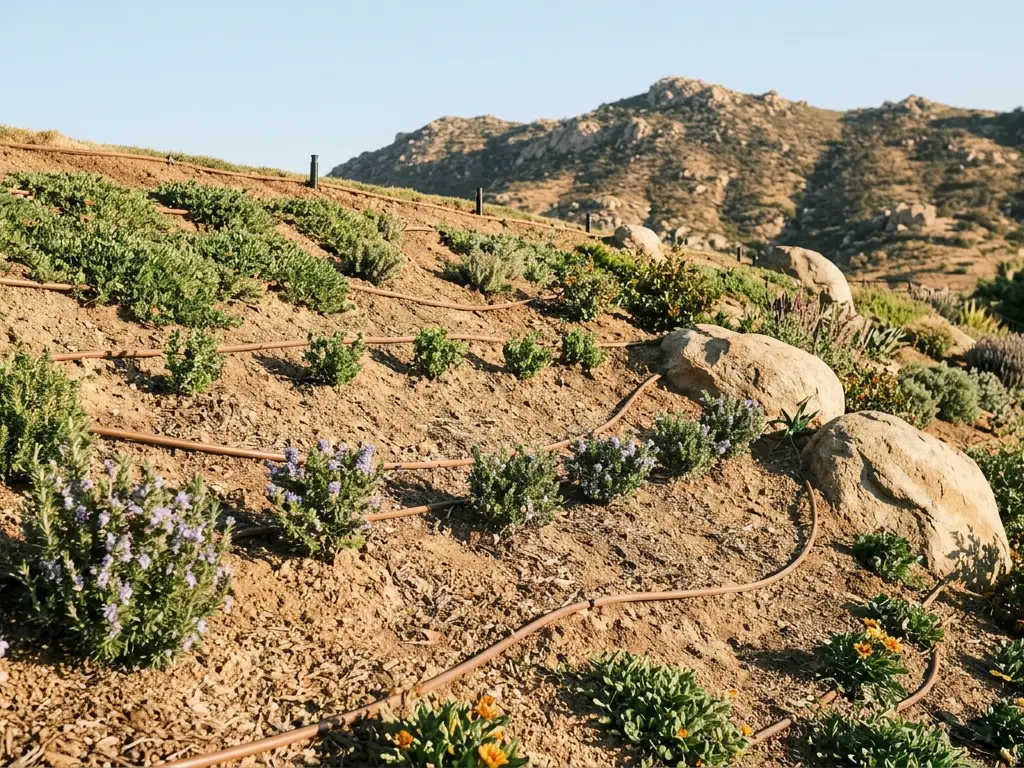
A drip zone runs $300 to $1,200 to install; watering thin granitic soil with spray heads loses most of the water off the rock and the slope, and trenching rock for pipe that should never have been buried can reach $4.00 a square foot.
$100 to $400 for most repairs
Most sprinkler repairs in Alpine run $100 to $400 (HomeGuide, February 2026). Drip runs $300 to $1,200 a zone, and rocky or sloped ground can reach $4.00 a square foot to install, mostly because of digging and access.
Get a price: (619) 361-7869What Alpine yards tend to show
- Spray water running off rock and down the slope
- Plants in pockets of soil drying out in a day
- Pipe that could not be buried deep, cracked or sun-damaged
- Drip tubing chewed by gophers or rabbits
- Heads at the bottom of a slope dribbling after the zone stops
Eight inches of soil
The Cieneba soil mapped here is coarse sandy loam, 68.5 percent sand, that takes water quickly, at about 4 inches an hour, but sits on soft granitic bedrock about 8 inches down. It holds very little water, so plants dry out fast, and anything beyond what the thin layer can hold runs along the rock and off the slope. Frequent short waterings at the root suit it; long soaks do not.
That makes drip the default here: emitters at each plant, surface tubing under mulch where trenching would mean cutting rock, and pressure-compensating emitters on slopes. See drip irrigation installation.
Padre Dam rules in the foothills
Padre Dam's standing rules apply in Alpine: spray heads and hoses limited to 10 minutes per area per day, watering only before 10 a.m. or after 6 p.m., no runoff, and no watering during or for 48 hours after rain. On soil that drains as fast as this one, short cycles inside those windows are what the ground wants anyway.
Water running where it should not? Describe what you see and get a price range on the phone.
Call (619) 361-7869Slopes and low heads
On a slope, water left in the pipe drains out of the lowest heads after the zone stops. Check valves at those heads hold it in. Rotating nozzles in short cycles, or drip on the contour, keep the water on the slope instead of at the bottom of it. The slope irrigation page covers it in more detail.
Plants drying out between waterings?
On soil this thin, that usually means the schedule, not the system. Call and describe the slope and what is planted.
Call (619) 361-7869Questions from Alpine
How much does sprinkler repair cost in Alpine?
Most repairs run $100 to $400. Drip runs $300 to $1,200 a zone, and rocky ground can reach $4.00 a square foot to install.
Who supplies water in Alpine?
Padre Dam Municipal Water District, which limits spray heads to 10 minutes per area per day, before 10 a.m. or after 6 p.m.
Why do my Alpine plants dry out so fast?
The soil mapped here is coarse sandy loam about 8 inches deep over granite. It drains quickly and holds little water.
What are the signs a slope zone is wasting water?
Water running off rock or down the face during a cycle, and low heads dribbling after the zone stops.
Is drip a good fit for Alpine yards?
Usually the best fit: water at each plant, on the surface under mulch, without cutting rock for trenches.
Common jobs here
- Drip irrigation installationWater at the root, not on the wall: drip for beds, shrubs, trees, vegetables and anything on a slope.
- Slope irrigationBanks, terraces and backyard hills, watered slowly enough that the water stays on the slope.
- Backflow preventer repairA failed annual test, a relief valve dumping water, or an old assembly that has reached the end of its life.
Tell us which zone is acting up
Say what you are seeing (a geyser, a dry patch, a zone that will not shut off, a timer that went blank) and roughly how big the yard is. You will hear what the fix usually involves and what it tends to cost before anyone comes out.
Call (619) 361-7869