
Symptom guide
El Cajon Sprinklers: Signs You Need Sprinkler Repair in El Cajon
What you are looking at right now, what it usually means, and how urgent it is.
- El Cajon and East County9 nearby communities, all within 20 miles
- Licensed, insured local contractorsWe work with them; check any license at cslb.ca.gov
- Written price firstTypical ranges published on every service page
- Calls answeredMonday to Saturday, 7am to 6pm
El Cajon Sprinklers wrote this symptom guide for El Cajon and East County homeowners standing in the yard trying to work out what is wrong. Sprinkler problems show up as a short list of things you can see, and each one points to a short list of causes. Match what you see to the sections below before you call, and the first conversation gets a lot shorter.
Water where it should not be
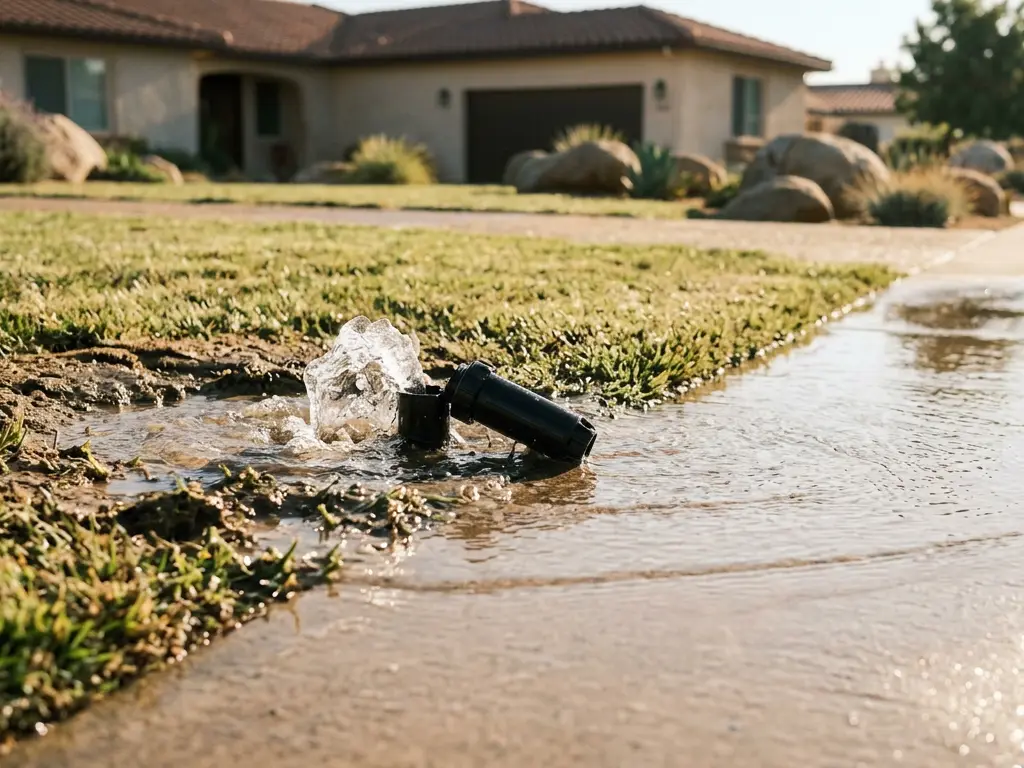
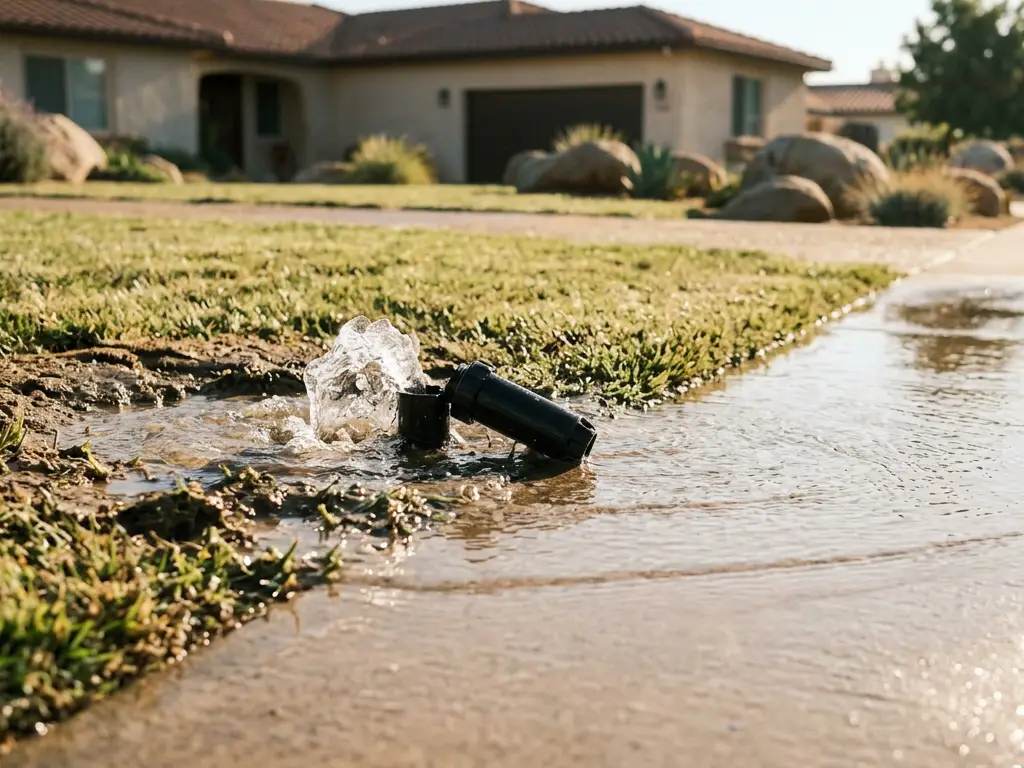
A geyser or bubbling at a head
A head snapped off its riser, usually by a mower or a tire. Shut the zone off. It is the most common repair there is, typically $65 to $90 a head; see sprinkler head replacement.
Water rising from the ground with everything off
The mainline, the pipe that stays under pressure all day. Close the irrigation shutoff or the main water valve. This is the urgent one.
Water in the gutter on a dry morning
Either runoff from a zone that ran too long for the soil, or a leak. If it happens only after watering, it is the schedule or the nozzles; if it happens at other times, it is a leak or a stuck valve.
Wet spots and dry spots
A soggy patch that never dries
A slow leak in a lateral or at a head's fitting, or a valve that weeps after the zone shuts off. On the clay mapped under much of East County, a leak shows up close to its source as a soft patch.
A green patch greener than the rest
Extra water from somewhere: a leak, a weeping valve, or the low end of a slope where water collects.
Brown arcs or rings between heads
Heads not reaching each other: a misaimed nozzle, a head sunk below the grass, a clogged nozzle, or low pressure on the zone. HomeGuide lists low pressure, pooling, soggy spots and pop-ups that do not rise among the core signs a system needs repair.
Water running where it should not? Describe what you see and get a price range on the phone.
Call (619) 361-7869Zones that misbehave
A zone that will not turn on
Usually electrical: a cut wire, a burned-out solenoid, or a controller station that failed. Wiring repairs run $60 to $100.
A zone that will not turn off
A valve stuck open by grit, a torn diaphragm or scale on the plunger. Close the irrigation shutoff until it is repaired. Valve repair runs $70 to $300.
Two zones running at once
A valve that does not close fully, or a wiring fault that sends voltage to the wrong valve.
Weak or strange spray
Heads that rise slowly or throw short usually mean low pressure: a partly closed shutoff, a leak on the zone, a clogged filter or too many heads on one valve. Mist that drifts away means too much pressure. A ragged or lopsided pattern usually means a nozzle crusted with scale; Helix water averages about 12.5 grains of hardness per gallon, and that builds up over a few seasons.
The signs on paper
A water bill higher than the same month last year, with no change in watering, is a sign by itself. Turn off every tap and the controller and watch the meter's low-flow indicator. If it stops when you close the irrigation shutoff, the leak is in the sprinkler system, and irrigation leak detection is the next step.
Not sure which of these you are looking at? Most people are not. Call and describe it.
Call (619) 361-7869Signs in a drip system
Drip fails more quietly. A single plant browning in a healthy bed, a small fountain at a fitting, white crust on emitters, or tubing pulled out of a fitting all point to drip problems, usually chewed tubing, scale, or a failed pressure regulator.
How the local conditions change the signs
In Spring Valley and Lemon Grove, where the soil is mapped as Diablo clay, a leak surfaces as a soggy patch close to the break, and runoff starts within minutes on a spray zone. In central El Cajon, where sandy loam sits over a clay layer about 13 inches down, water from a leak can run along the clay and surface feet away. In Alpine, on thin soil over granite, the first sign of a problem is often plants drying out, because there is so little soil to hold water.
What to do while you wait for a repair
- Turn the affected zone off at the controller, or set it to zero minutes
- Close the irrigation shutoff if water runs with everything off
- Hand water anything the dead zone serves during hot weather
- Mark broken heads with a flag or a stake so they are easy to find and are not mown again
- Take a short video of the zone running; it helps more than a description
- Note the meter reading, so a leak can be confirmed later
None of these fix anything, but they stop the water bill climbing and make the visit faster. If a zone has to stay off for more than a few days in summer, hand watering is cheaper than replanting.
How urgent is it?
- Now: water rising with everything off, a zone that will not shut off, a geyser
- This week: a soggy patch, a weeping valve, runoff every cycle
- Before summer: brown arcs, weak zones, a controller on the wrong schedule
- At the next visit: scaled nozzles, misaimed heads, a timer losing its program
Symptom questions
What are the signs my sprinkler system is failing?
Geysers, soggy or sunken patches, dry arcs between heads, weak spray, zones that will not start or stop, water in the gutter and a rising bill.
How do I know if my sprinkler has a leak?
Turn off every tap and the controller and watch the meter. If it stops when the irrigation shutoff is closed, the leak is in the sprinkler system.
Why does one zone of my sprinklers not turn on?
Usually a cut wire, a failed solenoid or a controller station. Wiring repairs typically run $60 to $100.
Why are there brown spots between my sprinkler heads?
Heads not reaching each other, from misaimed or clogged nozzles, sunken heads or low pressure.
Is water in the gutter a problem?
Yes. Every water supplier around El Cajon prohibits runoff, and it means either the schedule is wrong for the soil or something is leaking.
Tell us which zone is acting up
Say what you are seeing (a geyser, a dry patch, a zone that will not shut off, a timer that went blank) and roughly how big the yard is. You will hear what the fix usually involves and what it tends to cost before anyone comes out.
Call (619) 361-7869